
📌 Key Takeaways
A complete move-in record helps renters separate pre-existing issues from damage that may occur during their tenancy.
- Inspect Before Moving In: Complete the inspection before bringing belongings inside, so every room remains visible and easy to check.
- Document Every Space: Take clear, timestamped photos of each room, including areas that appear clean and undamaged.
- Check Room by Room: Test doors, windows, outlets, fixtures, appliances, plumbing, stairs, storage areas, and attached garages.
- Record Every Issue: Make sure each concern is added to the condition report, clearly describe its location, and keep a signed copy.
- Keep Evidence Safely: Store inspection photos and reports throughout the tenancy and until the security deposit has been returned and any related questions have been resolved.
Document it now to reduce questions later. The room-by-room guidance below gives first-time renters a clear process to follow.
~ ~ ~ ~ ~ ~ ~ ~ ~ ~ ~ ~ ~ ~ ~ ~ ~ ~
Signing a lease on a townhome is exciting, but before the boxes come in and furniture gets arranged, there's one task that deserves full attention: a thorough move-in inspection.
For renters without much experience, this step can feel uncertain. What exactly should be documented? What counts as damage versus normal wear? This guide breaks it down into clear, manageable steps so anyone can walk through a Manitoba townhome inspection with confidence.
Why Does a Move-In Inspection Matter for Manitoba Renters?
Under Manitoba's Residential Tenancies Act, either a landlord or tenant can request a rental unit condition report at the start of a tenancy. When one is requested, both parties take part in documenting the unit’s condition. A completed condition report, signed by both parties, provides a clear record that can help resolve questions about damage when the tenancy ends.
Skipping this step, or rushing through it, is one of the most common mistakes first-time renters make. Careful documentation at move-in can help prevent significant disagreements over your security deposit later.
What Tools Should You Bring to a Townhome Inspection?
No special equipment is required. The essentials are:
- A smartphone for photos and video
- A notepad or digital notes app to log observations
- The condition report form provided by your property manager
- Good lighting: Open blinds and use your phone’s flashlight for darker areas such as closets and utility rooms.
Timestamped photos and video can provide useful supporting evidence if questions arise later.
How to Inspect a Townhome Step by StepWhen You Have No Experience
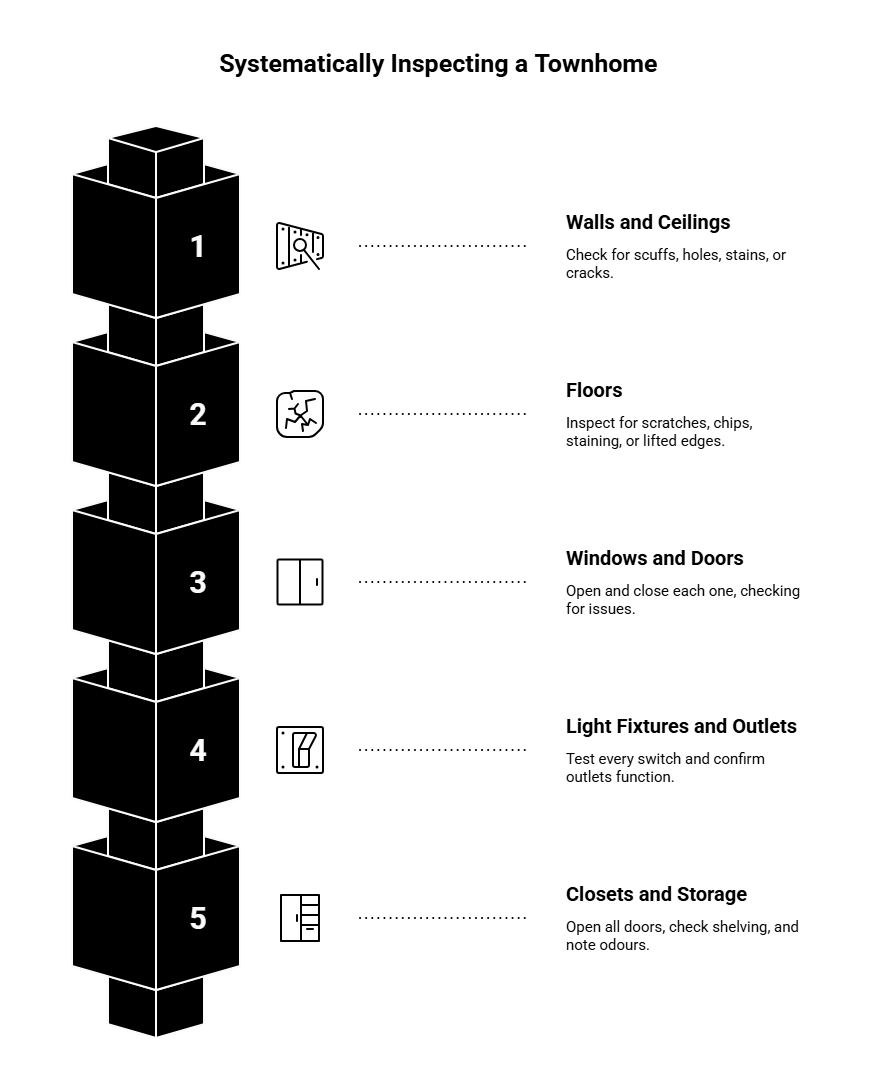
The key is to move through the unit room by room, checking the same set of items in each space. Rushing leads to missed details.
What to Check in Each Room
- Walls and ceilings: Look for scuffs, holes, stains, or cracks. Note all visible marks, including minor ones.
- Floors: Check for scratches, chips, staining, or lifted edges on hard flooring. On carpet, look for stains, fraying, or flattened areas.
- Windows and doors: Open and close each one. Note if any stick, have broken locks, cracked glass, or damaged screens.
- Light fixtures and outlets: Test every switch and confirm outlets function.
- Closets and storage: Open all doors, check shelving condition, and note any odours.
What to Inspect in the Kitchen and Bathrooms
These areas require extra attention due to moisture exposure:
- Run taps and check under sinks for signs of leaking or water damage
- Test exhaust fans
- Check grout, caulking, and tile condition around tubs and showers
- Note any rust staining or chips in fixtures
What to Inspect in Multi-Level Areas
Townhomes in Manitoba often span two or three floors, which means staircases and attached garages also need documentation. Check stair treads for loose boards or worn edges, and inspect garage floors for cracks or oil staining.
How Should Inspection Findings Be Documented?
Photographs should be taken of every room, even spaces that appear to be in good condition. The goal is a complete visual record of the unit's state on day one.
For each issue found:
- Photograph it clearly
- Note the location and brief description in writing
- Record it on the official condition report form
Once complete, submit the signed condition report to your tenant relations manager promptly. Retain a copy for your own records throughout the tenancy.
What Counts as Reasonable Wear and Tear in a Manitoba Rental?
Reasonable wear and tear refers to the gradual deterioration that comes from ordinary use, such as lightly worn flooring or faded paint over time. Damage is generally more significant and may include broken fixtures, large wall holes, or staining caused by carelessness. The circumstances matter, so document anything you are unsure about.
When in doubt, document it. It costs nothing to photograph a questionable area, and doing so can reduce ambiguity later.
Start Your Tenancy the Right Way with Forthright Properties
A well-managed rental makes the inspection process straightforward. Forthright Properties provides professionally maintained homes across Manitoba, with clear move-in processes designed to give residents confidence from day one.
As part of Forthright’s move-in process, a team member completes a walkthrough of the home with the new resident. Together, they review the condition of the unit, document any existing damage or deficiencies, and complete the move-in condition report. The resident signs the inspection form and receives a copy for their records, helping ensure both parties have a clear understanding of the home’s condition at the start of the tenancy.
The walkthrough also gives residents an opportunity to become familiar with their new home, ask questions, and learn important details about maintenance requests, utilities, appliances, building guidelines, and other day-to-day responsibilities.
Harvest Gate offers modern townhomes built with quality finishes that are easy to maintain. If a well-maintained townhome in a welcoming Manitoba community sounds right, Harvest Gate is worth exploring.
Frequently Asked Questions
What is a rental condition report and is it required in Manitoba?
A condition report is a written and visual record of a rental unit's state at move-in and move-out. While not legally mandated in all cases under Manitoba's Residential Tenancies Act, completing one is strongly recommended and widely used by professional property managers to protect both tenants and landlords.
When should a move-in inspection be completed?
The inspection should be completed on or before move-in day, ideally before any belongings are brought into the unit. This ensures the documentation reflects the unit's true baseline condition.
What happens if pre-existing damage is not documented?
If pre-existing damage is not documented, it may be harder to establish when it occurred. This can lead to disagreements at move-out or a claim against the security deposit. Thorough move-in documentation helps reduce that risk.
How long should inspection photos be kept?
Inspection photos should be retained throughout the tenancy and for a reasonable period after move-out, at minimum until the security deposit has been fully returned and any related questions have been resolved.